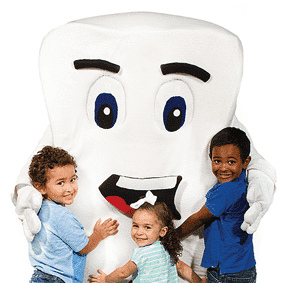



When choosing a dental provider for your child, you may find yourself comparing a pediatric dentist with a general dentist. Both can provide dental care for children, but there are important differences in their training, daily experience, office environment, and approach to young patients.
Those differences can affect how a child responds to dental care. Our experience with children in both general and pediatric settings has shown how much the environment, communication style, and focus of a practice can shape a child’s visit.
Understanding those differences can help you decide what type of dental setting may be the best fit for your child.
What Is the Difference Between a Pediatric Dentist and a General Dentist?
Both pediatric and general dentists are qualified dental professionals, and both can care for children. The main difference is how much of their training and daily practice is specifically focused on young patients.
Some of the primary differences include:
- Training focus: Pediatric dentists receive additional education focused specifically on children.
- Patient population: General dentists may treat patients across a very broad age range, while pediatric practices focus on young patients.
- Behavior guidance: Pediatric dentists receive training in techniques designed to help children feel comfortable during dental visits.
- Office environment: Pediatric dental offices are typically created with children in mind.
- Dental development: Pediatric dentists focus on the changes that happen as baby teeth develop, fall out, and are replaced by permanent teeth.
- Daily experience: Pediatric dentists and their teams work with young patients throughout their day.
These distinctions become clearer when we look at the training and approach behind pediatric dentistry.
Specialized Training for Pediatric Dentists
One of the most significant differences between pediatric dentists and general dentists is the additional training pediatric dentists receive.
Pediatric dentists complete an additional 2-3 years of specialized training after dental school. That education focuses on child psychology, growth and development, management of pediatric dental health issues, and treatment techniques specific to infants, children, and adolescents, including children with special needs.
Child Development and Pediatric Dental Needs
Children are not simply smaller versions of adult dental patients. Their teeth, jaws, behaviors, and dental needs continue to change as they grow.
Specialized pediatric training helps dentists understand those stages of development and the dental concerns that may arise along the way. That includes understanding primary and mixed dentitions and selecting materials and treatment methods that are appropriate for the age of each young patient.
Pediatric dental teams can also recognize conditions that may require orthodontic evaluation.
Behavior Guidance and Communication
Behavior management is another important part of pediatric dental training. Pediatric dentists learn techniques designed to work effectively with children and help create a more welcoming, less stressful dental experience.
The staff in a pediatric office also receive training focused specifically on treating young patients. Age-appropriate language and explanations can help children understand what is happening without making the experience unnecessarily frightening or confusing.
How Pediatric Dentists Address Children’s Changing Dental Needs
A child’s dental needs change significantly as they grow. Pediatric dentists focus specifically on these changes and the relationship between early dental care and developing permanent teeth.
Baby Teeth and Permanent-Tooth Development
Pediatric dentists care for primary, or baby, teeth while monitoring the development of the permanent teeth that follow.
Baby teeth can affect the alignment and health of adult teeth. By monitoring development as a child grows, a pediatric dentist can identify concerns and provide early intervention when problems are detected.
Preventive Dental Care
Preventive care is another major focus of pediatric dentistry. This includes teaching good oral hygiene habits to both children and parents and helping families understand how to care for their children’s teeth at home.
Pediatric dentists may also provide preventive treatments such as fluoride applications and sealants to help prevent cavities.
That education can be an important part of the dental visit. Helping children learn about their teeth while giving parents practical home-care guidance can make dental care something the whole family participates in.
Why the Pediatric Dental Environment Can Feel Different
Training is not the only distinction between pediatric and general practices. The physical setting itself can affect how a child experiences an appointment.
One of our registered dental hygienists, Natalie Coleman, saw this difference firsthand after working in long-established general dental practices before gaining experience in pediatric offices. The contrast helped show how strongly an office designed around children can influence their response to care.
A Space Designed Around Children
Pediatric dental offices are often designed to make young patients feel more comfortable. Bright, fun, or soothing colors may be used throughout the space, along with toys and child-sized dental equipment.
Children may also find books, magazines, television, movies, video games, and other entertainment intended specifically for them. Instead of asking a child to adapt to an adult-centered dental setting, much of the pediatric environment is already built around young patients.
That was one of the first differences Natalie noticed when she began working temporarily in pediatric practices. In the general offices where she had previously worked, much of the environment and activity centered on sophisticated adult restorative dentistry. In pediatric practices, virtually everything around her was geared toward children.
Helping Children Feel Less Anxious
The physical environment works alongside the way pediatric teams communicate with children.
Children may be more comfortable when dental procedures are explained using words they can understand. Pediatric dentists and their staff use age-appropriate communication and behavior-management techniques to reduce fear and anxiety.
Natalie also observed another difference in pediatric offices with open treatment areas. Children could see other children participating in dental care before it was their turn. Watching another child successfully go through the same experience could help make the setting feel less unfamiliar.
The “Tell, Show, Do” Approach
The “Tell, Show, Do” approach can become easier when a child can first see what is happening around them.
A child can hear an explanation, see part of the process, and then participate when it is their turn. Seeing another child do the same thing may build confidence and create the sense that, if another child can do it, they can do it too.
That kind of peer modeling was one of the differences Natalie noticed as children learned to participate in their dental care.
Pediatric Dental Teams Work With Children Every Day
Frequency of experience is another difference between pediatric and general practices.
Pediatric dental practices see children throughout the day. A family or general dentist may treat a couple of children during a day and, on some days, may not see any young patients at all.
Because pediatric practices focus on infants, toddlers, children, and teenagers, the dentists and staff spend much of their working day treating, comforting, educating, and supporting young patients.
That daily experience can influence everything from communication to the selection of materials and treatment methods appropriate to the child’s age.
What General Dentists Provide for Children
General dentists play an important role in dental care and can treat patients across many age groups. They commonly provide a broad range of services, including cleanings, fillings, crowns, and bridges.
Many general dentists are skilled at treating children. Their primary dental education, however, covers dental health across all ages rather than focusing exclusively on pediatric care.
That broader focus was reflected in Natalie’s earlier experience in family dental practices. The practices she worked in had been established for decades and served patients ranging in age from 3 to 103. During the first 13 years of her career, she also had the opportunity to learn from restorative family dentists performing complex total-mouth reconstructions.
When a General Dentist May Refer a Child
There may be situations in which a general dentist decides that a young patient would benefit from specialized pediatric care.
A referral may be appropriate when a child has complex pediatric dental concerns, certain orthodontic problems, behavioral concerns, or developmental issues that require a more specialized approach.
This does not mean general dentists cannot care for children. It reflects the difference between a provider whose education and daily practice cover patients of many ages and one whose additional training concentrates specifically on young patients.
When Parents May Prefer a Pediatric Dentist
Every child is different. Some are immediately comfortable at the dentist, while others need additional reassurance, explanation, or time to become familiar with the experience.
A pediatric practice can be especially helpful when the needs of the child align with the specialized training and child-focused environment offered there.
First Dental Visits and Younger Patients
Pediatric dentists care for infants, toddlers, children, and teenagers and can be especially well suited to a child’s first dental visits.
Those early appointments introduce a child to dental care and begin establishing how they feel about visiting the dentist. A setting designed around young patients can help make the experience more familiar and approachable.
Children With Dental Anxiety
Children who experience significant dental anxiety may benefit from a pediatric dentist’s specialized training and experience in managing these situations.
Natalie saw how difficult treating young patients could sometimes be in a general office centered heavily on adult restorative dentistry. Even while giving pediatric patients the same time, care, skill, and positivity, she observed that some children appeared bored, frightened, or out of place.
After moving into a pediatric setting, she saw children respond differently. They were entertained, engaged, and more involved in their care, which led her to look more closely at what made the two environments different.
Children With Special Healthcare Needs
Pediatric dental training also includes caring for children with special needs.
For families whose children have special healthcare needs, the additional pediatric training and experience in managing different situations may be an important consideration when choosing a dental provider.
A Note on Choosing a Pediatric Office
When comparing pediatric offices, the original guidance from Natalie’s experience was to look at Google reviews for practices near you. She suggested looking for an office with about a four-star rating and several recent reviews as one way to get a sense of other families’ experiences.
She also noted that businesses cannot alter those reviews. Reviews can therefore be one of the pieces of information parents consider as they decide where they feel comfortable taking their children.
A Dental Hygienist’s Perspective on Pediatric Care
Natalie’s perspective on pediatric dentistry developed through experience in both types of practices.
As a registered dental hygienist, she spent years working with and learning from two restorative family dentists. Both practices had been established decades before she arrived, and the patients she cared for ranged from age 3 to 103.
She enjoyed those practices and valued what she learned there, but treating children could sometimes be challenging in an environment centered around adult restorative dentistry. At times, she found herself entertaining young patients while waiting for the dentist to step away from a delicate adult procedure to examine them.
Natalie later took a break from clinical hygiene when her twin sons were born. At their first dental appointment in a pediatric practice, the dentist asked whether she would be interested in filling in for his hygienist the following week.
That temporary day in a pediatric office changed the direction of her career.
She saw happy children who were entertained and actively participating in their care. She enjoyed cleaning their teeth and found it fulfilling to talk with both children and their parents about home care. Although she brought the same time, skill, and positivity that she had given young patients in family practice, the children seemed to respond differently in the pediatric setting.
The experience gave her a new appreciation for pediatric dentistry and for the role that a child-focused environment, communication style, and daily experience can play in caring for young patients. Treating, educating, and comforting children and their parents became work she found especially rewarding.
Choosing Dental Care That Helps Your Child Feel Comfortable
Both pediatric and general dentists can provide dental care for children. The difference is that pediatric dentists receive additional training and build their daily practice around the dental, developmental, and behavioral needs of young patients.
For some families, a general dentist may be a comfortable fit. For others, the specialized training, child-focused environment, communication techniques, and daily experience available in a pediatric practice may make the difference they are looking for.
At Tebo Dental, our pediatric team is here to help children receive dental care in a welcoming and supportive setting. We want young patients to feel comfortable while learning habits that can support their oral health as they grow.
Ready to start your child’s dental journey? Request an appointment with our pediatric dental team.